

WRITTEN & SHOT ON iPHONE BY: STEVE HOLLOWAY
Rigging tutorial. Cinema cameras by Black Magic, Red, Arri, Sony, FujiFilm, Canon and Nikon have at least one thing in common.
Camera rigging.
Rigging is built around a cage added to the camera’s body as the foundation for mounting accessories like handles, monitors, microphones, rods and ssd storage. And for mounting the camera to booms, dollies, filming harnesses, cars, motorcycles and custom built frames.
Thanks to multiple manufacturers, the iPhone form factor also has several cage options available.
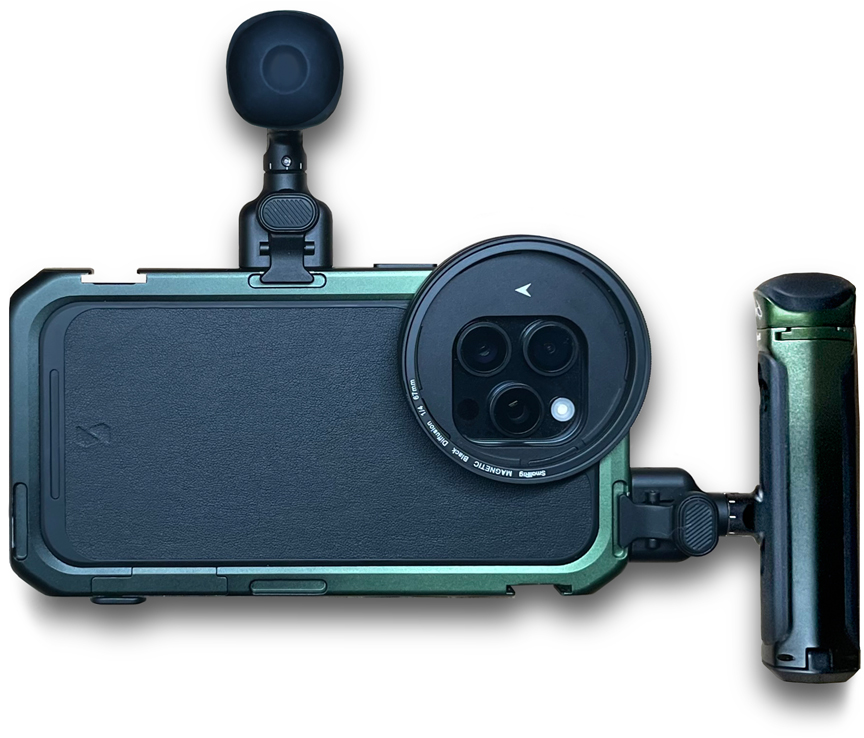

Co-designed with travel video cinematographer Brandon Li, this Smallrig cage has a low-profile design, multiple cold shoe and 1/4-20 attachment points, two quick release, fully rotatable handles, a detachable Bluetooth shutter release, a magnetic filter adapter, a variable neutral density filter and an auxiliary lens attachment plate.
It’s an elegant cage solution that jumps the gap from iPhone to versatile, compact, agile camera.
Smallrig isn’t alone. Beastgrip has been developing iPhone rigs for years (rigs I still have and use). And more players, about a dozen or so, are introducing products.

The biggest factor is Apple’s ongoing commitment to iPhone camera development.
Hundreds of Apple engineers and designers work constantly to develop and perfect the software, hardware, and firmware behind lens design, image processing, quality assurance, and image tuning.
The camera has advanced to the point that mid to big budget films are being shot on iPhone, proving its viability as a cinematography tool.
‘28 Years Later’, Danny Boyle‘s $60 million horror thriller might be the biggest.
Boyle chose iPhone 15s as the principal camera system, bringing the latest smartphones to high-end video.
Despite reporting otherwise, Anthony Dod Mantle,
Boyle’s cinematographer, confirmed in a quote in an IndieWire interview that “Everything was shot with the iPhone 15, with the exception (for technical reasons) of drone shots and the reddish infrared footage of the zombies feasting.”
EVERYTHING else is shot on iPhone 15s. That includes a 20 iPhone custom “bullet time” rig.
The small form factor of the iPhone, allowed Boyle to get even closer to and within the circle of action.
It also gave his filming equipment kit a small footprint to take into the remote, pristine locations he chose to create the film’s sense of abandoned, desolate reality.
Boyle’s crew did have something that we don’t, a team at Apple helping them configure the 15 Pro Max iPhones so the special effects people wouldn’t have any problems in post production.
That given, the versatile inexpensive iPhones are allowing more and more film makers to develop and produce projects.
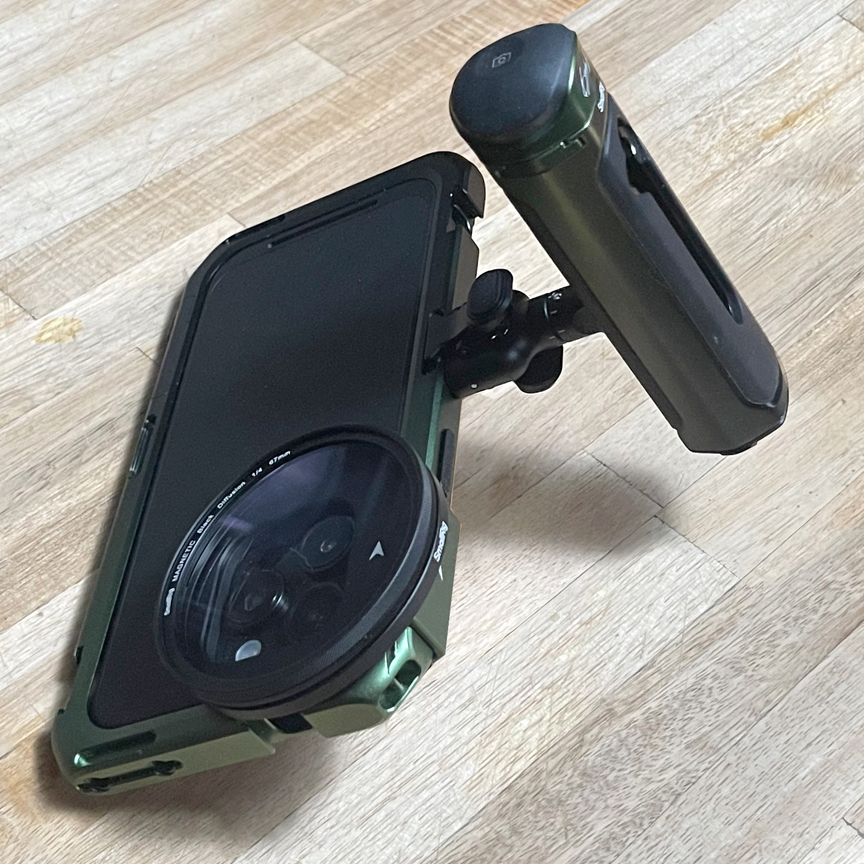
iPHONE 16 PRO MAX SMALLRIG CAGE WITH TOP HANDLE CONFIGURATION PLUS MAGNETIC FILTER ADAPTER.

While cages are designed by/for film, they translate directly to my main focus, still photography.
One of my favorite configurations is shooting with a top handle position plus the Black Mist 1/4 diffusion filter. The top handle lets me walk with the camera at waist level, inconspicuously capturing street images.
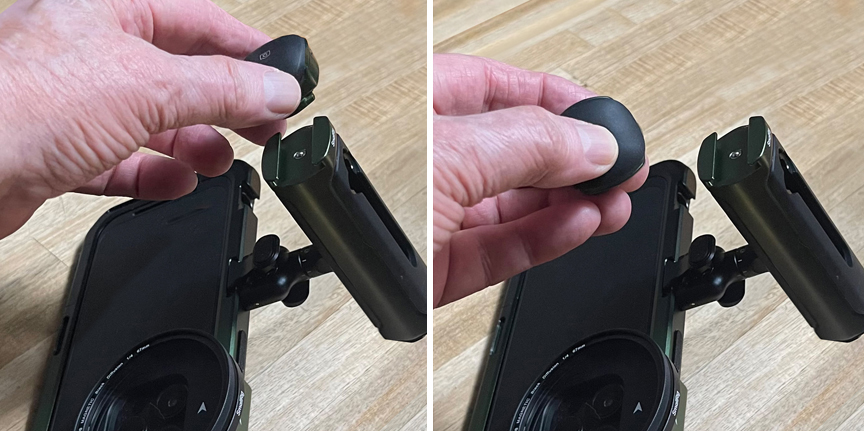
iPHONE 16 PRO MAX SMALLRIG DETACHABLE BLUETOOTH SHUTTER RELEASE.
Holding Smallrig’s detachable Bluetooth shutter release in the other hand lets me seamlessly blend in.
This top handle rig also facilitates easily moving from a ground level point of view all the way up to an inverted high angle shot.
The Black Mist 1/4 diffusion filter creates a sense of atmosphere by adding a subtle glow to light sources while maintaining blacks in the shadow areas.
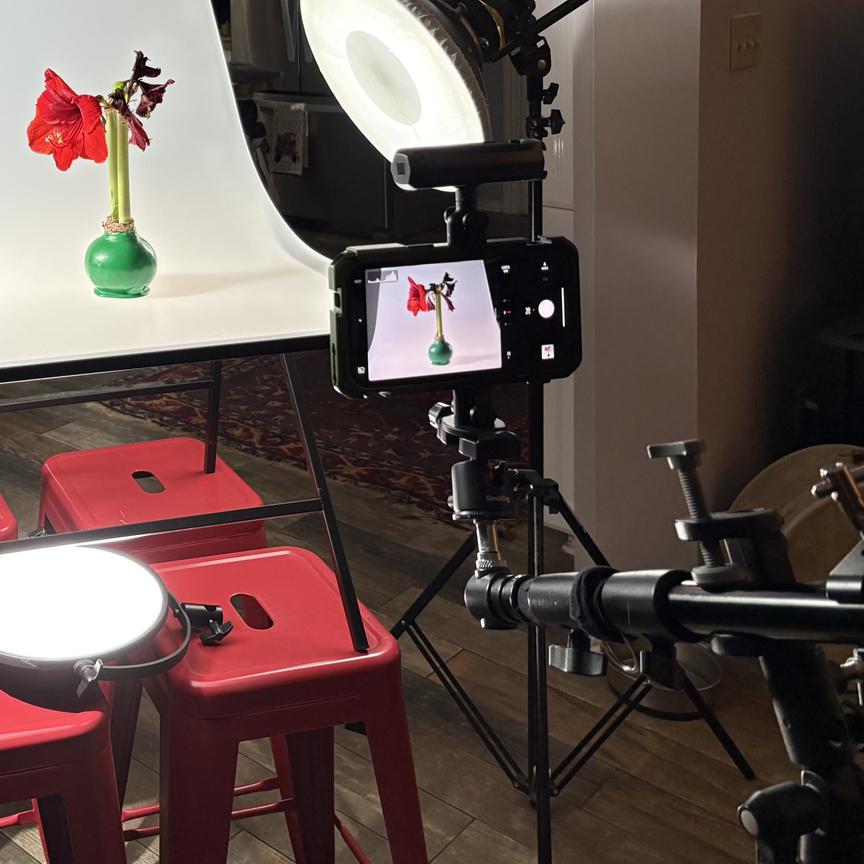

The SmallRig iPhone cage makes it easy to attach and detach the iPhone to camera rigs like the camera/light pole clamped to a light stand to shoot this tabletop set up.
The pole collapses to 30in and extends to 6ft to get low angle shots looking up and high angle to extreme high angle shots looking down.
And the small, lightweight form factor of the iPhone with cage make the rig easy for one person to handle.
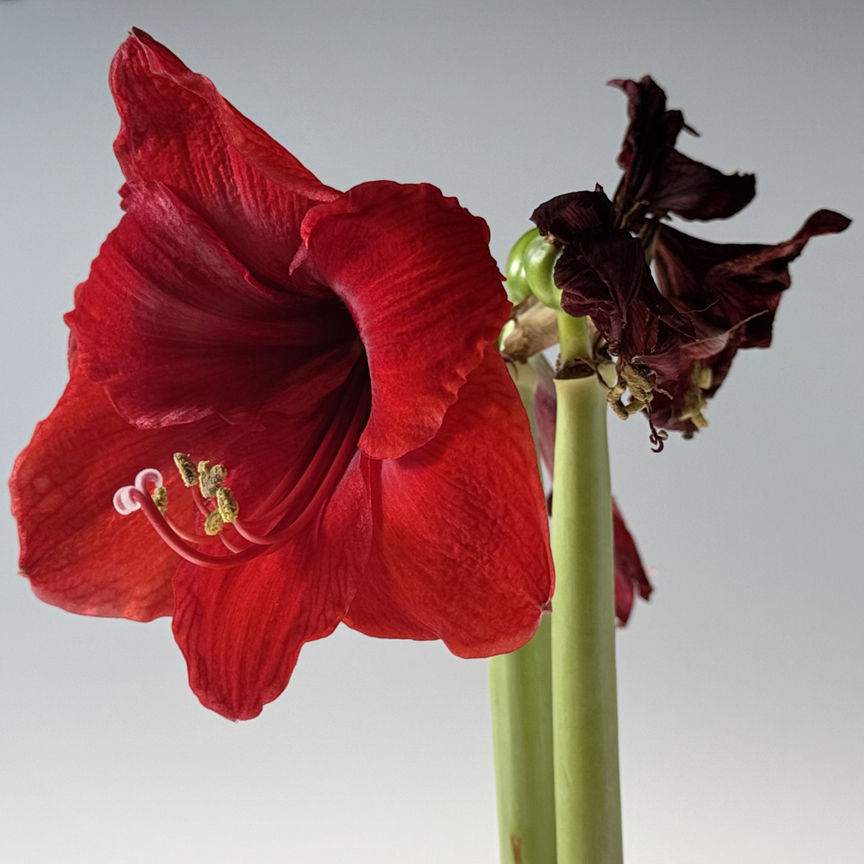

Black Magic has developed a versatile camera app for iPhone that gives film makers control over every aspect of camera control including FPS rate, f-stop, shutter angle, preview LUT and stabilization.
For still photography, the Leica LUX app brings the iconic Leica looks to iPhone photography. Developed with the assistance of Apple, the LUX app emulates 17 classic Leica color and monochrome film looks that include slider controls to adjust intensity and grain from 0 to 100% and emulates the looks of 9 classic Leica lenses including the original 1925 Leica 50mm lens.
The results are everything you would expect from Leica. Subtle, not over processed or over sharpened images with authentic film looks and a controlled amount of grain. Achieving the Leica looks through color grading could take hours of work on offloaded files. Using LUX onboard takes seconds to create on the fly, as you shoot. And you can change from look to look and lens to lens within the Leica LUX app after you capture the image.

Jump to any Point of View how to guide, process deep dive or a pre iPhone portfolio plus how influences shape the storytelling process and a memoir that looks at the story behind the stories and to Nonlinear Content galleries and stories.

Introduction
Become a storyteller
Technology
- 02A Digital evolution.
- 02B Annie Leibovitz.
- 02C From Batman to the iPhone.
- 02D Henri Cartier-Bresson’s Leica.
- 02E Moving from film to digital to iPhone.
- 02F The self portrait series.
- 02G iPhone camera rigging.

- 03A Working with light.
- 03B The scout.
- 03C Shooting during the golden hour.
- 03D Photographing people.
- 03E Details, shadows, shapes and textures.
- 03F Plate shots and reflections.
- 03G Feed your passions.
- 03H People and food, two favorites.
- 03I On the road.
- 03J Wall art (it’s not what you think).
- 03K Transitional images.
- 03L Night photography.

- 04B Assemblages and abstractions.
- 04C Change the composition of an image.
- 04D Color correction vs color grading.
- 04E Create motion with Live Photo.
- 04F Resize images and retain detail.
- 04G Software and skill building resources.
- 04H On device apps.
- 04I Offboard resources.

- 05A Two key iPhone features.
- 05B Camera and light kit ideas.
- 05C Copied on iPhone.
- 05D Learning post production.
- 05E Designing with type.
- 05F Learning from cinema.
- 05G The three lens solution.