
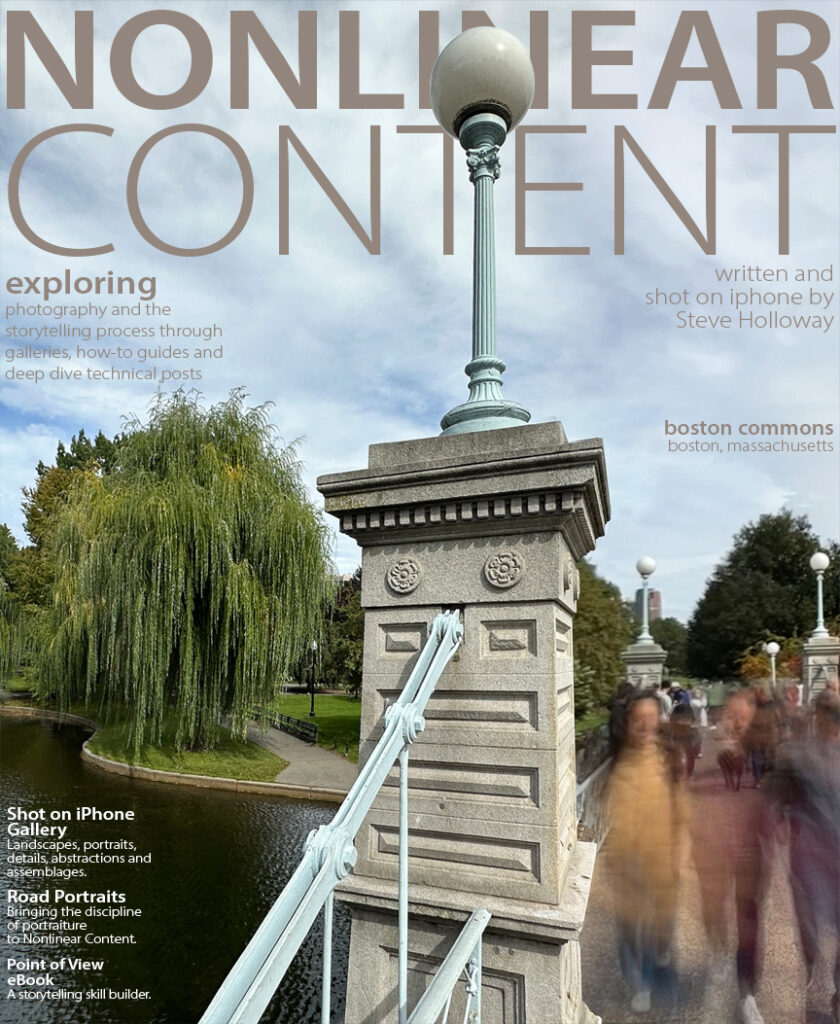
A platform for photography and Shot on iPhone stories and galleries plus the NEW eBook, Point of View, a storytelling skill builder of how to guides and step by step process deep dives.

Image galleries. Street photography. Stories about the history of photography with a focus on digital image capture. My edit workflow. What the photographers and cinematographers I follow and what they have to say about how they work and how those influences shape/shaped my work.
Why I shoot on iPhone, only iPhone, and how those icons of photography and film think iPhones fit into the image creation landscape.
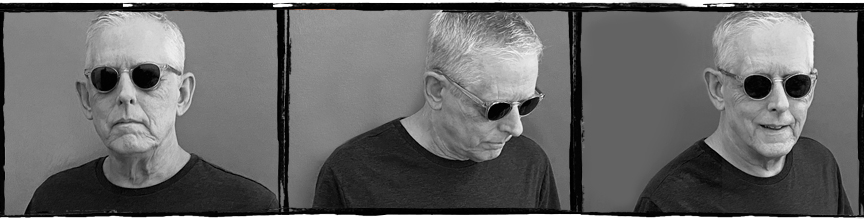
SELF PORTRAIT [ ANDY WARHOL TRIBUTE ]

WRITTEN AND SHOT ON iPHONE BY: STEVE HOLLOWAY
In fifth grade I took my first camera to school. Not for special events but to photograph kids at their desks, on playgrounds and in classrooms.
That’s how I learned to visualize, see and capture images.

Photography, marketing, design and copywriting. Halfway through my career, I went back to my first love, photography. I worked as an assignment photographer until I retired.
Retiring gave me the freedom to photograph and write about only what interests me.
Photography and road trips are two of my favorite subjects. They evolved into Drop Top Road Trips with images and stories from Route 66, the Grand Canyon, the Texas Hill Country and the beaches of Padre Island.
And into Nonlinear Content.
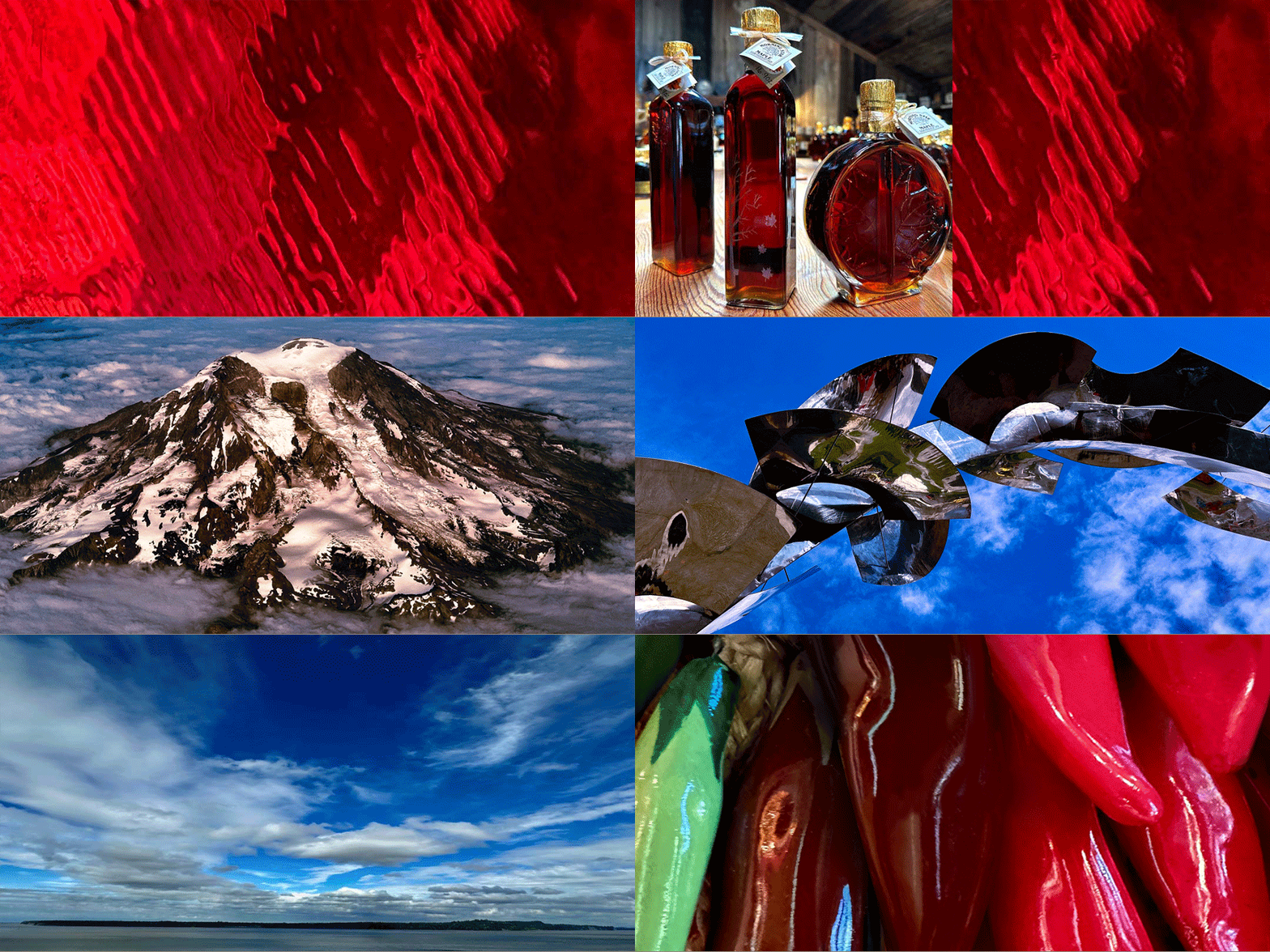

Nonlinear Content explores photography and the storytelling process.
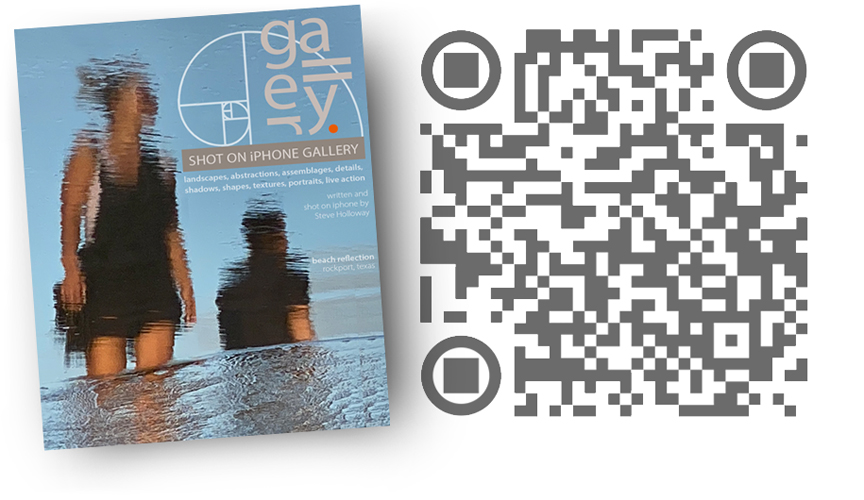
Shot on IPhone Gallery is a digital publication of images from the road, street photography and still lifes.
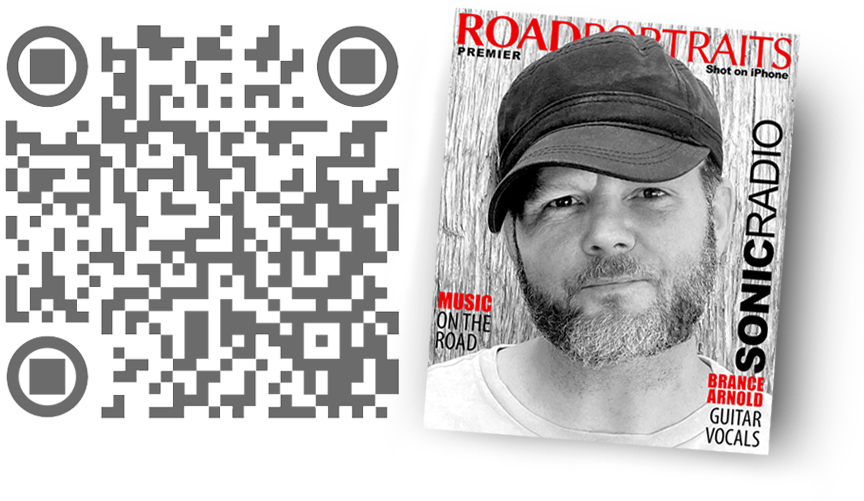
Road Portraits explores one of my favorite disciplines, portraiture.
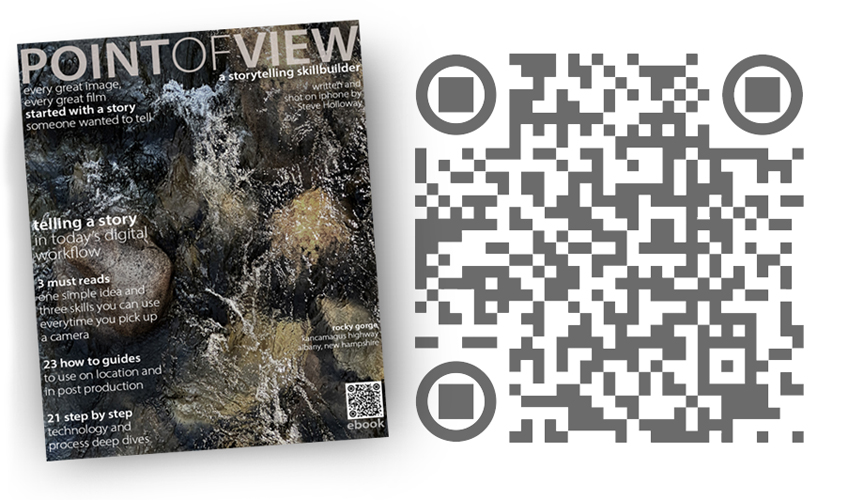

Every great image, every great film started with a story someone wanted to tell. The new eBook, Point of View is a storytelling skill builder of how-to guides and deep dive technical posts with a focus on how shooting on iPhone is changing our visual landscape.
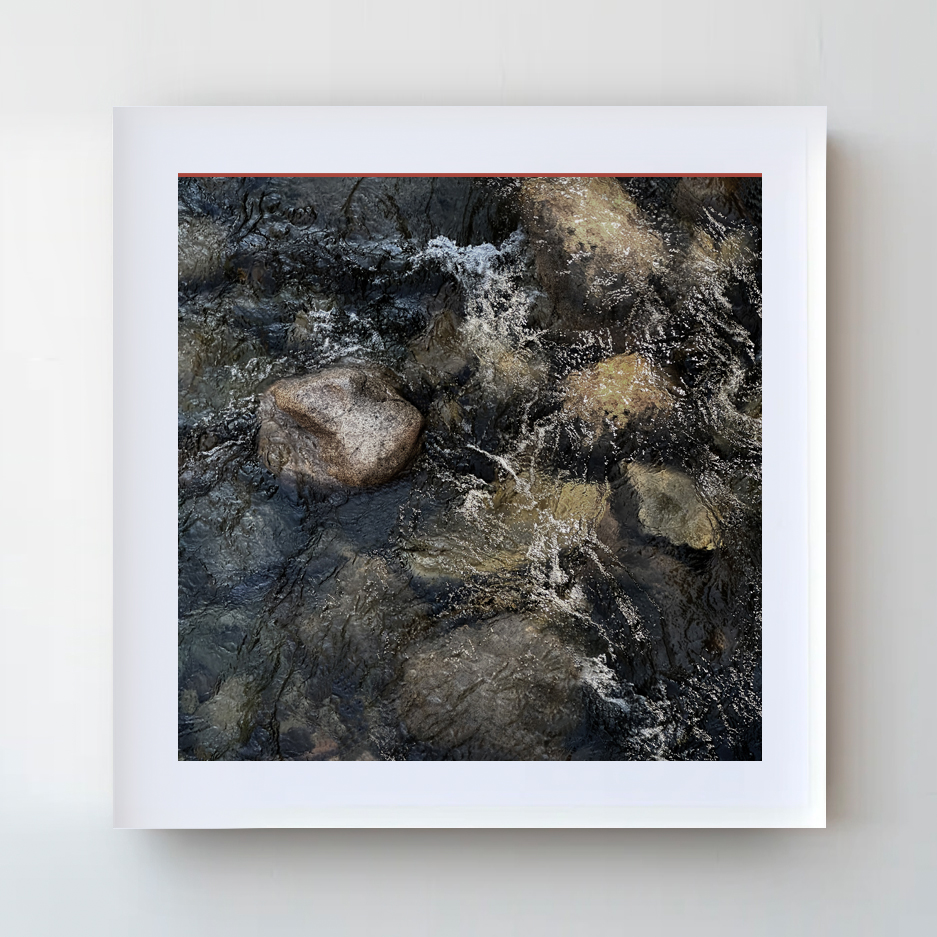

From the screen to the wall is a project tasked with developing a workflow to test the reproduction limits of iPhone images output on high resolution 20″x20″ images printed on 24″x24″ archival paper and 10″x10″ images printed on 12″X12″ archival paper. Also testing a 48’x48″ rolled canvas. Currently in edit and post production. Release date to be announced.


Source links to the photographers, artists, creatives, directors, cinematographers and storytellers I’ve studied and learned from most of my life.
Photographer Jacques Henri Lartigue Imaginative images from turn of the century Paris. Photographer W. Eugene Smith The photo essay. Cinematographer Greig Fraser The storytelling process and using technology. Photographer Dean Collins Lighting. Lighting. Lighting. Photographer Bert Stern Photoillustration and symbolism. Advertising Icon David Ogilvy Copywriting and combining words and images. Filmmaker Stanley Kubrick Letting the viewer participate. French Architect Villard D Honnecourt Developing the foundation of page design. Fashion photographer Robert Farber Using lens diffusion and supplementing light. Director, screen writer David Mamet Answering the questions, Where do I put the Camera? What do I tell the actors/people? Artist, Publisher Andy Warhol Portraits, self portraits and Interview Magazine. Photorealist portrait painter Chuck Close His approach to portraiture. Photographer Annie Leibovitz A lifetime defining and redefining our visual landscape. Photographer Richard Avedon Mural scale insightful portraits. Photographer Vivian Maier A lifetime of relentless commitment to doing the work without any recognition.


The “Where to next?” index at the end of each post lists galleries and stories with new additions shown first followed by the Toolbox how-to guides.


Create a personal content experience. Newest posts listed first. Enjoy!
The “Where to next?” index at the end of each post lists galleries and stories with new additions shown first followed by the Point of View eBook of how-to guides, process deep dives and early work.
- About Nonlinear Content
- Street [ Photography ] Cha Cha Changes
- Shot on iPhone Gallery 2
- Shot on iPhone Gallery 1
- Road Portraits 1
- Road Portraits 2

Introduction
Become a storyteller
Technology
- 02A Digital evolution.
- 02B Annie Leibovitz.
- 02C From Batman to the iPhone.
- 02D Henri Cartier-Bresson’s Leica.
- 02E Moving from film to digital to iPhone.
- 02F The self portrait series.
- 02G iPhone camera rigging.

- 03A Working with light.
- 03B The scout.
- 03C Shooting during the golden hour.
- 03D Photographing people.
- 03E Details, shadows, shapes and textures.
- 03F Plate shots and reflections.
- 03G Feed your passions.
- 03H People and food, two favorites.
- 03I On the road.
- 03J Wall art (it’s not what you think).
- 03K Transitional images.
- 03L Night photography.

- 04B Assemblages and abstractions.
- 04C Change the composition of an image.
- 04D Color correction vs color grading.
- 04E Create motion with Live Photo.
- 04F Resize images and retain detail.
- 04G Software and skill building resources.
- 04H On device apps.
- 04I Off board resources.

- 05A Two key iPhone features.
- 05B Camera and light kit ideas.
- 05C Copied on iPhone.
- 05D Learning post production.
- 05E Designing with type
- 05F Learning from cinema
- 05G The three lens solution