

WRITTEN & SHOT ON iPHONE BY: STEVE HOLLOWAY
At a 2001 ASMP (American Society of Media Photographers) meeting, a photographer told me about Annie Leibovitz’s 1999 San Antonio shoot to photograph Fiesta royalty for her book Women.
Leibovitz had hired him, through the ASMP referral list, to assist her.
It’s two years before digital so this was a film shoot.
Leibovitz had 100 rolls of film and consumables shipped to his studio to keep refrigerated until the day of the shoot. His main job was keeping film backs loaded and handing them to her then unloading, marking and logging the exposed rolls.
He got to watch the photographer who shot for Rolling Stone, Vanity Fair and book after book after book, defining the visual landscape of America along the way.
Between setups he asked what she looks for while she’s shooting. She answered, “I start shooting and keep shooting until I know I got the shot.”

Hearing this story changed the way I thought/think about shooting. And what I think about every time I pick a camera up.
It also made me wonder how many times I stopped shooting before the real shot happened. How many times I walked away just before I would have found a different point of view, watched the light shift or an obstruction move or a facial expression change in a way that better told the story I was portraying.
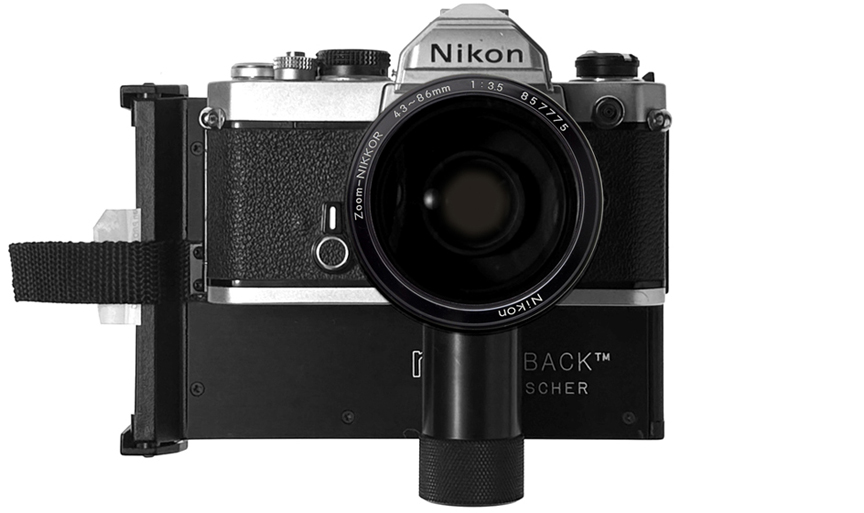
MY PRE-DIGITAL NIKON FM WITH POLAROID BACK.

Digital commercial photography was just around the corner but it wasn’t here yet.
A big part of a photographer’s job (my job) was still very mechanical. Starting with film and lighting test shoots before going on location to nail down how each will work on a particular assignment. Then choosing which film to use and how to process it. Lighting every set up to compensate for film’s limited dynamic range. Shooting Polaroids (lots of Polaroids) to check lighting. Manually confirming focus and determining exposure.
It was easy to be preoccupied with the technical side of shooting, to solve the mechanical problems, shoot and move on.
Then I heard this story. It was an eye-opening, “why hadn’t that ever occurred to me before” moment.
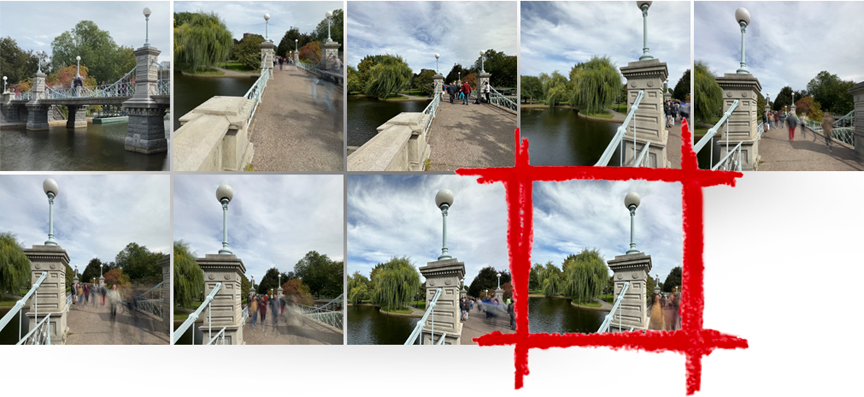
OCTOBER 2022: BOSTON COMMON BRIDGE CONTACT SHEET.

This story taught me how to think beyond technical issues.
To think about the process. Start shooting and keep shooting until you know you got the shot. It mirrors advice realist portrait painter Chuck Close gave in an interview on how to create art: “Do something. Do something to it. Do something else to it. Do that until you know you have it.”
It’s an idea that touches everything you do when you’re shooting.
Fast forward to today. The iPhone’s automatic focus and exposure together with AI assisted HDR (high dynamic range) image capture technology solves the technical issues of lighting, exposure and focus that took so much time, skill and effort. That makes it the perfect tool to shoot with straight out of your pocket. And to keep shooting until you know you got the shot.
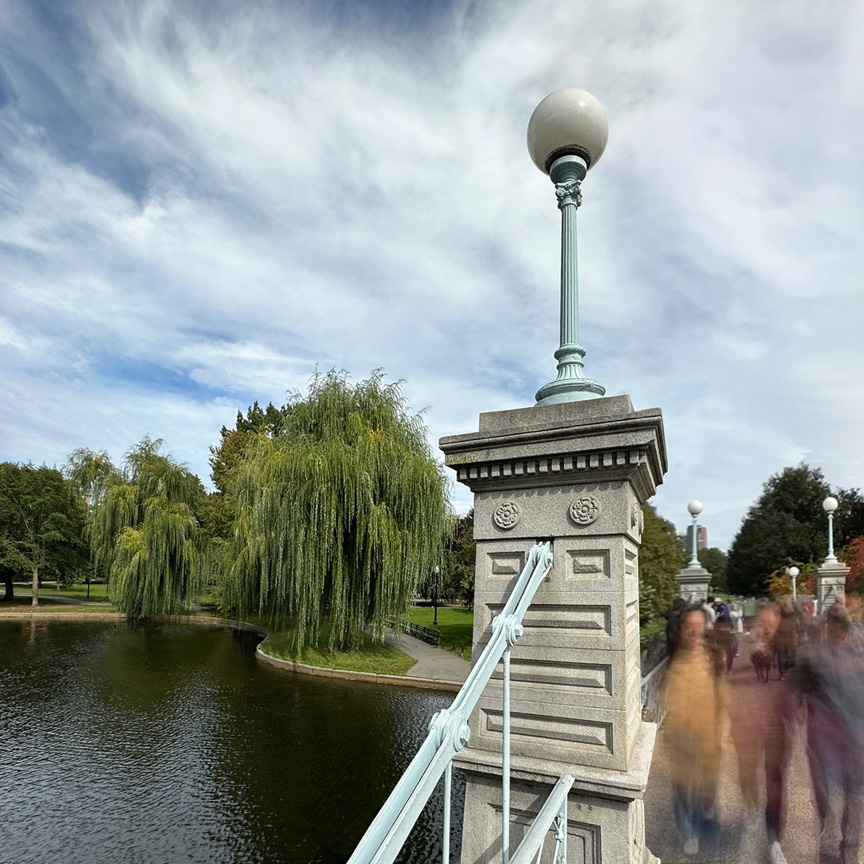
OCTOBER 2022: BOSTON COMMON, BOSTON, MASSACHUSETTES.
I captured a three-quarter image of the Boston Common Bridge from the shoreline and kept shooting as I walked up first to the bridge entrance then halfway across. At each point of view on the bridge, I stopped and waited for visitors to walk by.
Total time, four minutes to capture nine images.

It’s 20+ years since I heard this story. I’ve found that about a fourth of the time, the best shot is one of the first shots taken and more than half of the time, it’s one of the shots from the last setup (for Boston Common, it was image 9 of 9, for the still life, it was image 12 of 14).
And that it’s very, very rare that I don’t capture the image I had visualized.
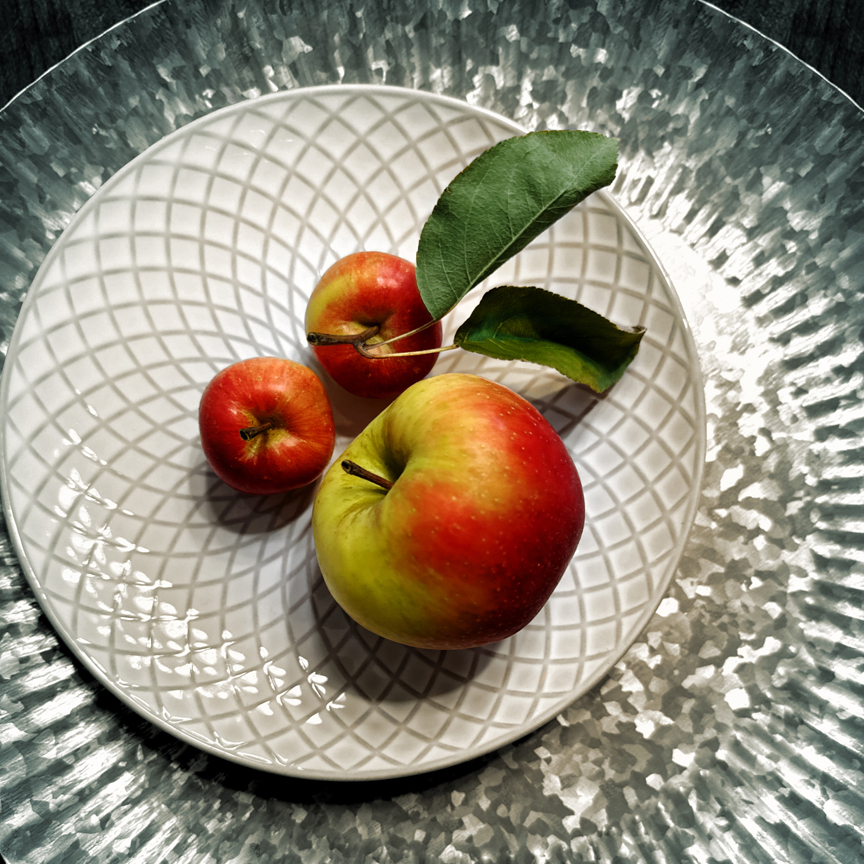
Three Apples with Plate & Platter. During our 2022 trip through New England, we stayed in Peterborough, New Hampshire. These apples are native to the region and were picked nearby. This still life, image 12 of 14, was captured as part of the New England trip story.
Captured with an iPhone 14 Pro Max, shooting overhead looking straight down on a dining room table, handheld using a Beastgrip and Bluetooth remote trigger (my everyday setup), under natural overhead tungsten lights.
The image has been color corrected and graded retaining the main subject’s vivid color and brightness then grading the background to add a low key color grade.

Shooting During the Golden Hour
The last hour before sunset and the first hour after sunrise are called the “golden hour”. Movies will shoot for an hour after sunrise and an hour before sunset for days to capture a golden hour scene.
Shoot during the golden hour’s even, soft, directional, warm light and it will be hard to overexpose or underexpose highlights or shadows. It’s almost always the perfect light to capture extraordinary images.
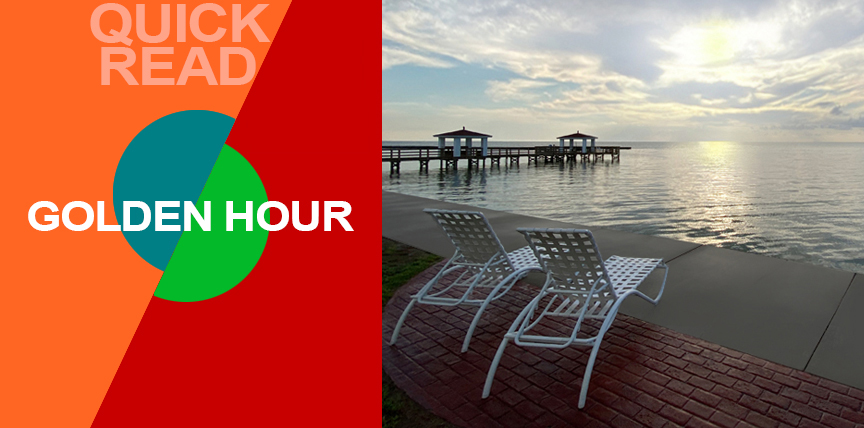
The Bay Behind The Lighthouse Inn. During our Back to the Coast road trip, I photographed Rockport Bay outside of our room at The Lighthouse Inn more than once and wasn’t happy with any of the shots.
Then, on our last night, shortly before sunset, during the golden-hour, I looked out the window of our room. The clouds had broken and the sunlight was skimming perfectly across the water. I hurried to get outside. I started with a view from our back patio then moved closer.
I shot at the ground level point of view. Then eye level. Finally, I placed the camera at waist level and captured this image handheld on an iPhone 11 Pro Max with Beastgrip and Bluetooth shutter release.


Jump to any Point of View how to guide, process deep dive or a pre iPhone portfolio plus how influences shape the storytelling process and a memoir that looks at the story behind the stories and to Nonlinear Content galleries and stories.

Introduction
Become a storyteller
Technology
- 02A Digital evolution.
- 02B Annie Leibovitz.
- 02C From Batman to the iPhone.
- 02D Henri Cartier-Bresson’s Leica.
- 02E Moving from film to digital to iPhone.
- 02F The self portrait series.
- 02G iPhone camera rigging.
- 02H Leica on iPhone (yes, Leica).
- 02I Lighting notes: Supplemental light.

- 03A Working with light.
- 03B The scout.
- 03C Shooting during the golden hour.
- 03D Photographing people.
- 03E Details, shadows, shapes and textures.
- 03F Plate shots and reflections.
- 03G Feed your passions.
- 03H People and food, two favorites.
- 03I On the road.
- 03J Wall art (it’s not what you think).
- 03K Transitional images.
- 03L Night photography.

- 04B Assemblages and abstractions.
- 04C Change the composition of an image.
- 04D Color correction vs color grading.
- 04E Create motion with Live Photo.
- 04F Resize images and retain detail.
- 04G Software and skill building resources.
- 04H On device apps.
- 04I Offboard resources.

- 05A Two key iPhone features.
- 05B Camera and light kit ideas.
- 05C Copied on iPhone.
- 05D Learning post production.
- 05E Designing with type.
- 05F Learning from cinema.
- 05G The three lens solution.